
Why Landscape and Ecological Management Plans (LEMPs) Matter for Solar Energy Projects
Solar energy projects are long-term land use decisions. Once constructed, a site may operate for 30 years or more. That means land management choices made at the outset have lasting implications, not only for energy generation, but for biodiversity, landscape character and planning compliance.
This is where a Landscape and Ecological Management Plan (LEMP) becomes critical.
At Heathcote Renewables, we see LEMPs as delivery frameworks rather than documents. For solar developments, they provide the structure that ensures biodiversity commitments are implemented properly, integrated with infrastructure and maintained throughout the operational life of the site.
A LEMP Is a Long-Term Commitment
A Landscape and Ecological Management Plan sets out how habitats associated with a development will be created, enhanced, managed and monitored – typically over 25 to 30 years.
For solar schemes, the LEMP underpins planning compliance and Biodiversity Net Gain (BNG) delivery. With legislation requiring a minimum 10% biodiversity uplift secured for at least 30 years, the LEMP explains how that uplift will be achieved, evidenced and sustained.
In practical terms, a strong solar LEMP provides:
- Clear, measurable habitat objectives
- Defined management prescriptions over the lifetime of the asset
- A monitoring framework to demonstrate compliance
- Certainty for developers, landowners and planning authorities
It also provides clarity during construction and operation. Habitat areas must work alongside access tracks, inverter stations, cabling corridors and panel arrays. A well-prepared LEMP ensures ecological objectives complement operational performance rather than compete with it.
Unlocking Biodiversity Potential on Solar Sites
Solar farms retain large areas of permeable land beneath and around panel arrays. With the right management, this land can deliver measurable ecological enhancement.
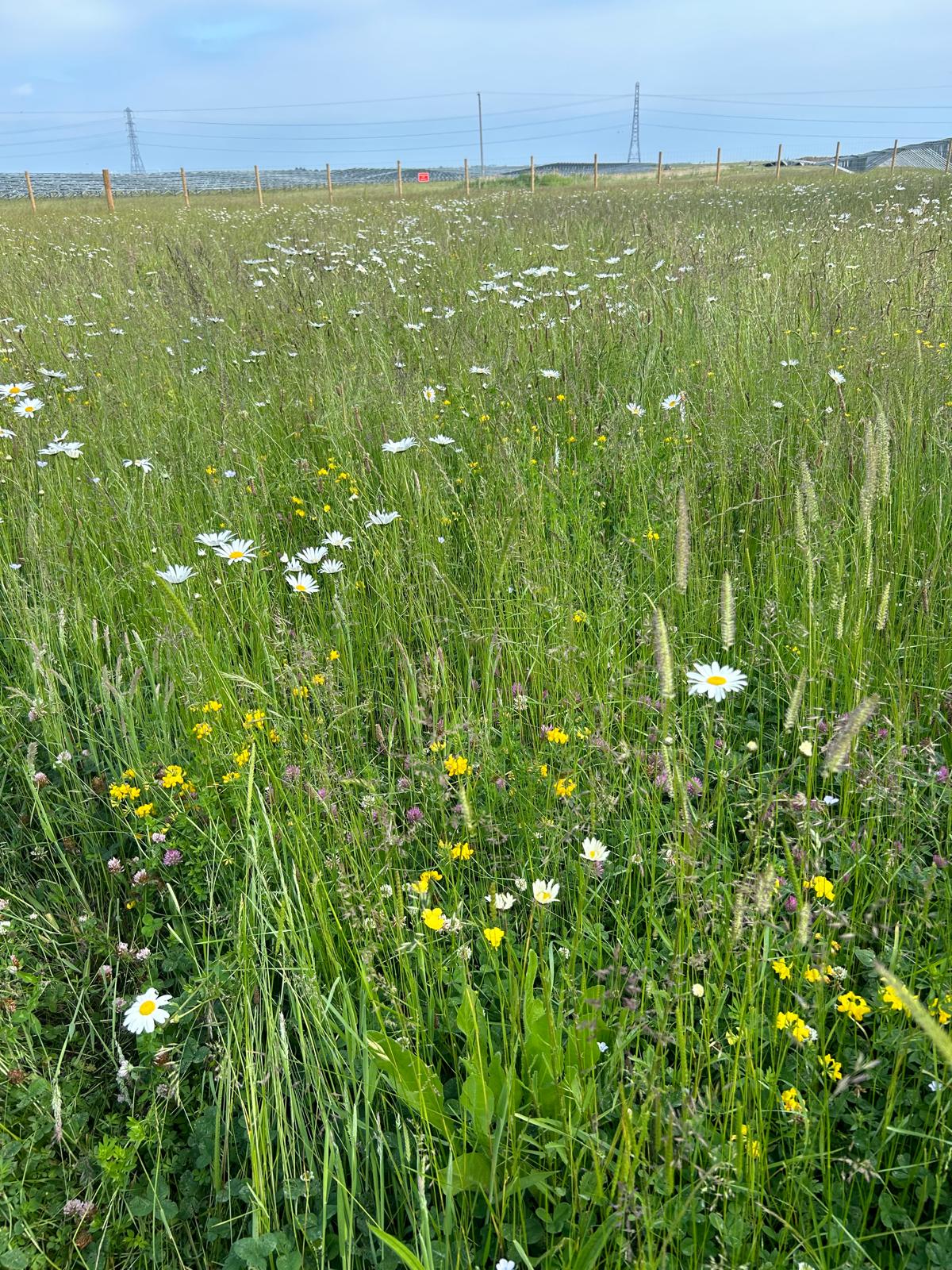
Typical measures include native hedgerow and tree planting to strengthen site boundaries, the establishment of species-rich grasslands and wildflower meadows beneath panels, and where appropriate, pond or wetland creation. Existing woodland edges and field margins are often enhanced to improve habitat connectivity across the wider landscape.
These habitats are designed to support priority species such as:
- Birds and ground-nesting species
- Bats and commuting corridors
- Amphibians associated with wet features
- Pollinators and invertebrates
Grassland management beneath the arrays is particularly important. Cutting regimes or conservation grazing must prevent shading and maintain access while encouraging diverse sward development. When managed properly, these areas improve soil health, strengthen resilience and provide long-term ecological value.
Monitoring then ensures habitats are developing as intended, with adaptive management applied where necessary to maintain alignment with agreed biodiversity targets.
Practical Delivery Makes the Difference
The effectiveness of a LEMP depends entirely on how it is implemented.
Habitat creation must be carefully coordinated with construction programmes. Planting and establishment works need to consider drainage, ground conditions and access requirements. Ongoing management must operate safely within live solar environments.
Heathcote Renewables brings together civil engineering, access infrastructure and land management expertise to support renewable energy projects across the UK. Working within our group, we collaborate closely with Habitat Regeneration to deliver LEMPs in practice, from initial habitat creation through to long-term management.
This integrated approach allows us to:
- Implement approved habitat creation works accurately and efficiently
- Coordinate ecological delivery alongside live solar operations
- Provide structured long-term management aligned with planning conditions
- Support monitoring and reporting requirements linked to Biodiversity Net Gain
By combining construction understanding with specialist ecological delivery, we ensure LEMPs are not just compliant on paper but functioning successfully on site.
Stewardship Over the Life of the Asset
Solar projects are central to the UK’s low-carbon transition. They also present a significant opportunity to enhance biodiversity at scale.
A well-designed and effectively delivered Landscape and Ecological Management Plan ensures a solar development becomes more than an energy asset. It becomes a well-managed landscape that supports wildlife, strengthens ecological networks and demonstrates responsible long-term stewardship.
If you are progressing a solar development and require support with LEMP delivery or long-term management, Heathcote Renewables can provide practical, integrated expertise to ensure compliance and lasting ecological value.
